
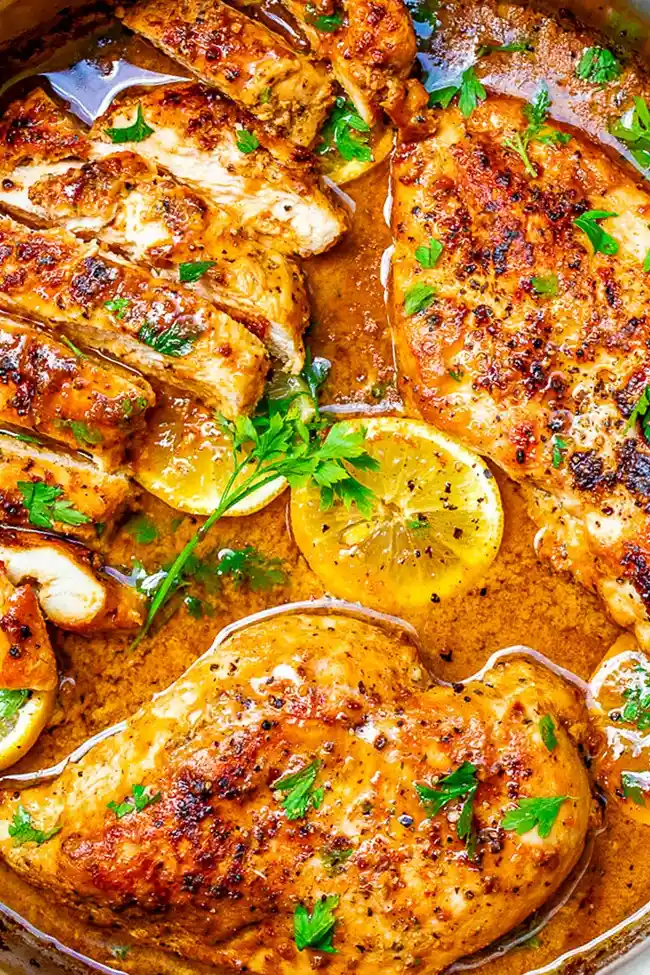
This fast stovetop meal combines tangy Dijon mustard and rich butter for a restaurant-quality dinner. It is an efficient one-pan recipe that minimizes cleanup while maximizing flavor. You can have this tender chicken on the table in about 20 minutes.
List of ingredients
- 3 tablespoons olive oil – used for searing the chicken.
- 1 1/2 to 1 3/4 pounds boneless skinless chicken breasts – pounded to an even thickness, approximately 4 pieces.
- 1 to 2 teaspoons poultry seasoning or 21 Salute Seasoning – for savory depth.
- 1 teaspoon kosher salt – or adjust to your taste preference.
- 1 teaspoon freshly ground black pepper – or adjust to your taste preference.
- 1/2 cup chicken broth – used for deglazing the pan.
- 1/4 to 1/3 cup Dijon mustard – add more for a heavier sauce consistency.
- 3 tablespoons unsalted butter – adds richness to the pan sauce.
- 3 to 4 tablespoons lemon juice – provides brightness and acidity.
- 1 to 2 tablespoons honey – optional, used to balance the tanginess.
- lemon slices – optional, for visual garnish.
- 2 teaspoons fresh parsley – optional, for a fresh finish.
step-by-step instructions
- Sear the chicken: Heat olive oil in a large skillet over medium-high heat. Add the pounded chicken breasts and season them evenly with poultry seasoning, salt, and pepper. Cook undisturbed for 5 minutes to develop a golden crust; if the breasts are thicker, sear for 6 to 7 minutes.
- Flip and finish: Flip the chicken over and cook for another 5 minutes or until the meat is fully cooked through. Do not move or disturb the chicken during this process to ensure a proper sear.
- Rest the meat: Use a slotted spatula to remove the chicken from the skillet. Place the pieces on a plate and let them rest for a few minutes to retain juices.
- Deglaze the pan: Carefully pour the chicken broth into the hot skillet. Allow the liquid to bubble and steam violently for several seconds to loosen the browned bits from the bottom.
- Create the sauce: Stir in the Dijon mustard, butter, and lemon juice. Continue stirring for about 1 minute until the butter is completely melted and the sauce is well combined.
- Sweeten the sauce: Turn off the heat. Taste the sauce and stir in honey if you prefer a sweeter flavor profile.
- Combine: Return the chicken to the skillet. Flip the pieces to coat them thoroughly in the lemon butter sauce and spoon extra sauce over the top.
- Garnish: Top with fresh parsley and lemon slices if desired, then serve immediately.
Advanced Searing Techniques
Use a Meat Mallet for Even Thickness
Pounding chicken breasts ensures that the thickest part of the meat cooks at the same rate as the thinnest part. Use a meat mallet or a heavy rolling pin to flatten the breasts to a consistent half-inch thickness. This process also breaks down tougher muscle fibers, resulting in a more tender texture. Cover the meat with plastic wrap first to prevent tearing the surface of the chicken.
Maintain High Heat for Proper Browning
To achieve a medium golden color, the skillet must be hot before the chicken is added. Medium-high heat allows the proteins to brown quickly through the Maillard reaction without overcooking the center. If the pan is too cool, the chicken will steam in its own juices rather than searing. Wait until the olive oil shimmers before placing the meat in the pan.
Avoid Moving the Meat During Searing
Resist the urge to flip or move the chicken breasts too early. Leaving the meat undisturbed allows the surface to form a proper crust, which locks in flavor and provides a better texture. If you try to flip the chicken and it sticks, it usually means the sear is not yet complete. The meat will naturally release from the pan once the crust has formed.
Mastering the Pan Sauce
The Importance of Deglazing
Deglazing is the process of adding liquid to a hot pan to loosen the browned food particles, known as fond. These particles contain concentrated flavor from the seared chicken and seasonings. Using chicken broth allows you to incorporate these bits back into the sauce for a deeper taste. Be careful of the steam that rises when the liquid hits the hot metal.
Emulsifying Butter and Mustard
Stirring the butter and Dijon mustard continuously prevents the sauce from separating. The mustard acts as a stabilizer, helping the fat from the butter blend smoothly with the chicken broth and lemon juice. Keeping the heat low during this stage ensures the butter melts without breaking. This results in a creamy, cohesive glaze that clings to the meat.
Balancing Acid and Sweetness
The combination of lemon juice and Dijon mustard provides a sharp, acidic profile. Adding honey is a practical way to balance this acidity and add a subtle sweetness. Adjust the amount of honey based on your personal preference or the tartness of your lemons. Taste the sauce after turning off the heat to ensure the flavors are balanced.
Ingredient Substitutions and Variations
Choosing Alternative Mustards
While Dijon is recommended for its smooth texture and sharp flavor, whole grain mustard can be used for a more rustic appearance. Brown mustard provides a similar punch but may be slightly more pungent. Avoid using standard yellow mustard, as its vinegar-heavy profile is too mild and does not pair well with the butter and lemon. If using whole grain, you may need to slightly increase the honey to balance the texture.
Swapping the Seasoning Blend
If you do not have a specific poultry blend, a mixture of dried thyme, rosemary, and oregano works well. These herbs complement the lemon and butter profiles perfectly. You can also use a pinch of paprika for added color and a mild smoky undertone. Keep the salt and pepper levels consistent regardless of the herb blend used.
Modifying Sauce Volume
To create more sauce for serving over sides, increase the amount of chicken broth and Dijon mustard by half. Ensure you maintain the ratio of butter to lemon juice to keep the flavor balanced. If the sauce becomes too thin, simmer it for an extra minute before adding the chicken back. If it is too thick, stir in a tablespoon of water or additional broth.
Recommended Serving Ideas
Low-Carb Vegetable Pairings
Roasted broccoli or steamed asparagus are excellent choices for a healthy side. The charred flavor of roasted vegetables complements the richness of the lemon butter sauce. Sautéed spinach with a hint of garlic also pairs well with the acidity of the dish. These options keep the meal light while providing essential nutrients.
Starchy Accompaniments
Classic mashed potatoes are ideal for soaking up the excess pan sauce. Alternatively, serve the chicken over a bed of wild rice or quinoa for a nuttier flavor. Egg noodles or angel hair pasta also work well, as the sauce acts as a creamy pasta topping. For a lower-carb starch option, try cauliflower mash.
Fresh Salad Combinations
A crisp house salad with a light vinaigrette cleanses the palate between bites of the rich sauce. Use mixed greens, sliced cucumbers, and cherry tomatoes for a refreshing contrast. A Caesar salad also pairs well with the lemon elements of the chicken. Avoid overly creamy dressings that might clash with the butter sauce.
Storage and Reheating Guidelines
Refrigeration for Meal Prep
Allow the chicken and sauce to cool completely before transferring them to an airtight container. Store the chicken with the sauce to prevent the meat from drying out in the fridge. This dish will stay fresh for up to five days when properly sealed. Ensure the container is completely airtight to avoid absorbing other fridge odors.
Freezing Instructions
For long-term storage, place the cooled chicken and sauce in a heavy-duty freezer bag. Squeeze out as much air as possible to prevent freezer burn. The meal can be stored in the freezer for up to four months. Thaw the chicken in the refrigerator overnight before reheating to maintain the best texture.
Optimal Reheating Methods
To reheat in a microwave, use 30-second bursts and stir the sauce between intervals to avoid rubbery meat. For a better result, warm the chicken in a skillet over medium-low heat for 5 to 10 minutes. Add a splash of water or chicken broth if the sauce has thickened too much during storage. Covering the pan with a lid during reheating helps steam the chicken back to tenderness.
Common Troubleshooting
Preventing Dry Chicken
The most common cause of dry chicken is overcooking. Use a meat thermometer to ensure the internal temperature reaches 165 degrees Fahrenheit. Pounding the meat to an even thickness also prevents the thin edges from drying out while the center cooks. Resting the meat for five minutes allows the juices to redistribute throughout the breast.
Fixing a Broken Sauce
If the butter separates and the sauce looks greasy, it is usually because the heat was too high. To fix this, whisk in a small amount of cold chicken broth over low heat. This helps re-emulsify the fats and liquids into a smooth sauce. Stirring constantly is the best way to prevent this from happening initially.
Managing Excess Oil
If there is too much olive oil left in the pan after searing, wipe some of it out with a paper towel before deglazing. Too much oil can prevent the sauce from emulsifying and leave a greasy film on the chicken. Leaving about one tablespoon of oil helps capture the browned bits without overloading the sauce with fat.
Frequently Asked Questions
Can I use chicken thighs instead of breasts?
Yes, boneless skinless chicken thighs can be used. They are more forgiving and less likely to dry out, but they may require a few extra minutes of cooking time. You do not need to pound thighs as much as breasts since they are naturally more uniform in thickness.
What if I do not have honey?
Honey is optional and used mainly for sweetness. You can substitute it with maple syrup or a pinch of brown sugar. If you prefer a savory profile, you can omit the sweetener entirely without affecting the structure of the sauce.
How do I know when the chicken is fully cooked?
The chicken is done when the juices run clear and the internal temperature reaches 165 degrees Fahrenheit. The meat should feel firm to the touch but still have some give. If you do not have a thermometer, cut into the thickest part to ensure there is no pink meat.
Print
Lemon Butter Dijon Chicken Skillet
- Total Time: 20 minutes
- Yield: 4 servings 1x
- Diet: General
Description
Tender, juicy chicken with a scrumptious sauce made with lemon butter, Dijon mustard, and chicken broth for extra flavor!! This EASY stovetop chicken recipe is ready in 15 minutes and will become a family dinner FAVORITE!!
Ingredients
- 3 tablespoons olive oil
- 1 1/2 to 1 3/4 pounds boneless skinless chicken breasts, pounded to an even thickness
- 1 to 2 teaspoons poultry seasoning
- 1 teaspoon kosher salt
- 1 teaspoon freshly ground black pepper
- 1/2 cup chicken broth
- 1/4 to 1/3 cup Dijon mustard
- 3 tablespoons unsalted butter
- 3 to 4 tablespoons lemon juice
- 1 to 2 tablespoons honey (optional)
- lemon slices (optional for garnishing)
- 2 teaspoons fresh parsley (optional for garnishing)
Instructions
- Step: To a large skillet, add the olive oil and pounded chicken; season with poultry seasoning, salt, and pepper, then cook over medium-high heat for 5 minutes without disturbing the chicken.
- Step: Flip the chicken over and cook for another 5 minutes, or until cooked through.
- Step: Remove chicken with a slotted spatula and place on a plate to rest.
- Step: Deglaze the skillet by adding chicken broth and allow the liquid to bubble up for a few seconds.
- Step: Add the Dijon mustard, butter, and lemon juice; stir continuously for about 1 minute until the butter is melted and the sauce is combined.
- Step: Turn off the heat and optionally stir in honey to taste.
- Step: Return chicken to the skillet, toss in the sauce, and spoon the sauce over the chicken.
- Step: Garnish with lemon slices and parsley, then serve immediately.
Notes
Pound the chicken breasts to an even thickness to ensure they cook evenly and remain tender. If you do not have 21 Salute seasoning, any poultry seasoning or a mix of oregano, thyme, and rosemary works well.
- Prep Time: 5 minutes
- Cook Time: 15 minutes
- Category: Chicken
- Method: Skillet
- Cuisine: American
Nutrition
- Serving Size: 1 serving
- Calories: 324 kcal
- Sugar: 10 g
- Sodium: 2934 mg
- Fat: 21 g
- Saturated Fat: 7 g
- Unsaturated Fat: 14 g
- Trans Fat: 0 g
- Carbohydrates: 12 g
- Fiber: 1 g
- Protein: 17 g
- Cholesterol: 69 mg