
This simple pasta dish combines burst grape tomatoes and fresh spinach for a light, flavorful meal. It is budget-friendly and comes together in under 40 minutes using basic pantry staples.
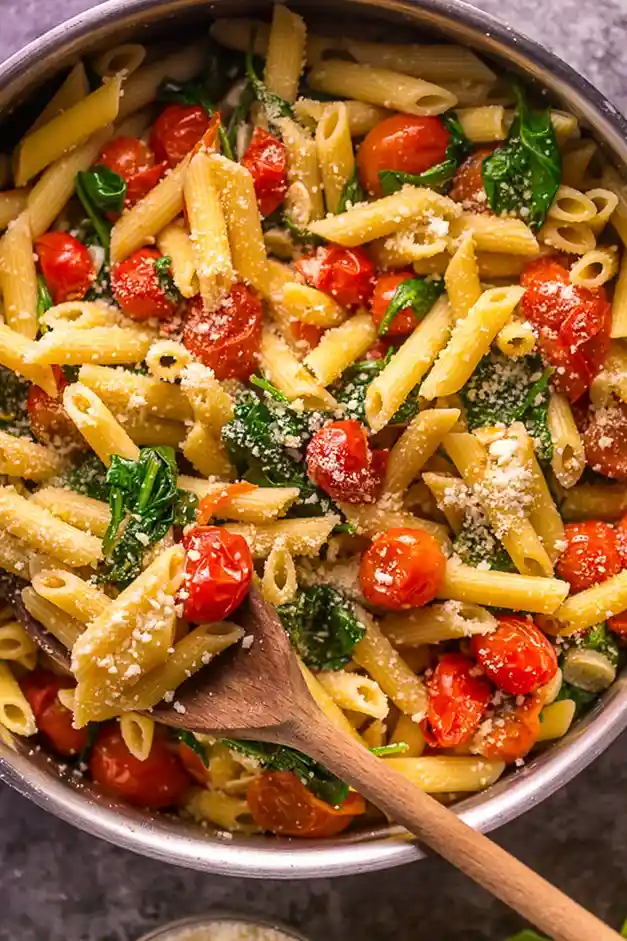
List of ingredients
- 1 lb penne (or your preferred pasta variety) – provides a sturdy base for the sauce.
- 1/2 cup olive oil – used for sautéing and creating a silky sauce.
- 1/4 teaspoon crushed red pepper flakes (optional) – adds a subtle heat.
- 2 pints grape tomatoes – these burst to create the natural sauce.
- 1 teaspoon salt – enhances all the vegetable flavors.
- 1/2 teaspoon black pepper – adds basic seasoning.
- 6 cloves garlic, thinly sliced – provides a fresh, aromatic punch.
- 1 cup chicken or vegetable broth – used for deglazing and simmering.
- 2 cups fresh spinach – adds color and nutritional value.
- Parmesan cheese, for serving (optional) – adds a salty, creamy finish.
step-by-step instructions
- Boil Water: Bring a large pot of salted water to a boil over medium-high heat.
- Sauté Tomatoes: Add olive oil to a large, wide pot and bring to a simmer over medium heat. Stir in the crushed red pepper flakes, tomatoes, salt, and pepper; cook for 9 to 10 minutes until tomatoes burst and release their juices. Use a wooden spoon to gently press them if needed.
- Simmer Sauce: Add the sliced garlic and cook for 1 minute until fragrant. Pour in the broth, bring to a boil, then reduce heat to a simmer for 5 minutes. Stir in the fresh spinach and cook until slightly wilted.
- Cook Pasta: While the sauce simmers, add the penne to the boiling water and cook for 9 to 10 minutes, or until al dente.
- Reserve Water: Drain the pasta, making sure to reserve 1/2 cup of the starchy pasta water.
- Combine: Toss the pasta immediately into the pot with the sauce and stir well. Add some reserved cooking water if the sauce is too thick. Taste and add more salt and pepper if desired.
- Serve: Remove from heat and divide into serving bowls. Top with Parmesan cheese and serve immediately.
Optimizing Your Pasta Selection
Selecting Penne Pasta
Penne is an ideal choice because its tubular shape and ridged exterior effectively trap the tomato juices and oil. This ensures every bite is well-coated with the sauce. If you cannot find penne, rigatoni is a suitable substitute due to its similar structure.
Exploring Spiral Pasta Varieties
Fusilli or rotini are excellent alternatives that offer more surface area for the sauce to cling to. The twists in these pasta shapes catch the small pieces of garlic and spinach. These options are particularly good if you prefer a more textured mouthfeel.
Using Gluten-Free Alternatives
Brown rice or chickpea pastas can be used to make this dish gluten-free. Be cautious with boiling times, as gluten-free varieties can go from al dente to mushy very quickly. It is recommended to check the pasta a minute before the package instructions suggest.
Tomato Selection and Processing
Benefits of Grape Tomatoes
Grape tomatoes are preferred over larger varieties because they have a higher skin-to-flesh ratio, which helps them hold their shape longer. They provide a concentrated sweetness that balances the acidity of the broth. Their size allows them to burst evenly during the sautéing process.
Using Cherry Tomatoes
Cherry tomatoes are a direct substitute for grape tomatoes and offer a juicier result. Because they contain more water, the resulting sauce may be slightly thinner. You may need to simmer the sauce for an additional minute or two to achieve the desired thickness.
Why Fresh Tomatoes Beat Canned
Fresh tomatoes provide a bright, clean flavor that is essential for this light dish. Canned tomatoes often have a metallic or overly processed taste that can overwhelm the delicate spinach. The natural process of bursting fresh tomatoes creates a unique, chunky texture that cannot be replicated with canned products.
Enhancing the Flavor Profile
Controlling Spice with Red Pepper Flakes
Adding crushed red pepper flakes to the oil at the beginning allows the heat to infuse throughout the entire sauce. If you prefer a milder taste, reduce the amount to a pinch or omit it entirely. For those who enjoy more heat, adding a pinch of fresh cayenne pepper can provide a deeper spice.
Slicing Garlic for Maximum Aroma
Thinly slicing the garlic instead of mincing it prevents the garlic from burning too quickly in the hot oil. Slices provide mellow pockets of flavor rather than an intense, sharp garlic taste. Ensure the slices are uniform in thickness to guarantee even cooking.
Incorporating Fresh Herbs
Fresh basil or parsley added at the very end can elevate the dish with a peppery or earthy note. Stir in a handful of torn basil leaves just before serving to maintain their bright green color. Avoid cooking the fresh herbs for too long, as they will lose their aromatic qualities.
Working with Fresh Spinach
The Advantage of Fresh Leaves
Fresh baby spinach is recommended because it wilts quickly and retains a mild flavor. Frozen spinach often contains excess water, which can dilute the sauce and make the pasta soggy. Fresh leaves provide a better textural contrast against the soft pasta.
Managing Wilt Times
Spinach should be added at the final stage of sauce preparation to avoid overcooking. Cooking spinach for too long turns the leaves a dark, dull green and destroys the nutrients. A quick stir for 30 to 60 seconds is sufficient to soften the leaves.
Substituting with Other Greens
Kale or Swiss chard can be used as a substitute for spinach for a heartier texture. These greens require a longer cooking time, so add them before the broth starts simmering. Chop them into small ribbons to ensure they integrate well with the penne.
Liquid Bases and Sauce Consistency
Utilizing Broth for Depth
Using chicken or vegetable broth instead of water adds a layer of savory depth to the sauce. The salt and minerals in the broth enhance the natural sweetness of the tomatoes. For a vegan version, high-quality vegetable broth is the best choice.
The Role of Reserved Pasta Water
Pasta water is rich in starch, which acts as an emulsifier between the olive oil and the broth. Adding a splash of this water helps the sauce bind to the pasta rather than sliding off. This creates a professional, glossy finish to the final dish.
Adding Acidity for Balance
If the sauce tastes too heavy or lacks brightness, add a teaspoon of fresh lemon juice at the end. The acidity cuts through the richness of the olive oil and highlights the tomato flavor. This is a helpful tip for balancing the dish without adding more salt.
Cheese and Finishing Touches
Integrating Parmesan Cheese
Stirring some Parmesan directly into the pasta creates a slightly creamier emulsion. The cheese melts into the sauce, adding a salty complexity that complements the spinach. Using a finely grated cheese ensures it distributes evenly throughout the pot.
Dairy-Free Cheese Substitutes
For a vegan alternative, nutritional yeast provides a similar nutty and cheesy flavor. You can also use a store-bought vegan Parmesan made from cashews or coconut oil. Simply sprinkle it on top just before serving to keep the texture intact.
Adding Texture with Toasted Nuts
Toasted pine nuts or slivered almonds can add a satisfying crunch to this soft dish. Toast the nuts in a dry pan over medium heat until golden brown. Sprinkle them over the bowls as a final garnish for added protein and texture.
Storage and Preservation
Refrigeration and Shelf Life
Store leftovers in an airtight glass container in the refrigerator for up to four days. The pasta will continue to absorb the sauce over time, which may make it thicker. Ensure the container is completely sealed to prevent the pasta from drying out.
Effective Reheating Techniques
The best way to reheat this pasta is on the stovetop over low heat with a splash of water or broth. This restores the sauce’s consistency without overcooking the noodles. If using a microwave, cover the dish and heat in short intervals, stirring in between.
Freezing Considerations
This dish is not recommended for freezing because the spinach and tomatoes can become mushy upon thawing. The pasta also tends to lose its structure and become overly soft. For the best quality, enjoy the meal fresh or refrigerated.
Meal Prep and Efficiency
Prepping Ingredients in Advance
You can slice the garlic and wash the spinach several hours before you begin cooking. Store the sliced garlic in a small container with a bit of oil to prevent oxidation. Having the tomatoes measured and ready reduces the active cooking time significantly.
Batch Cooking the Sauce
The tomato and garlic sauce can be prepared in a large batch and stored separately from the pasta. When ready to eat, simply boil the pasta and toss it into the heated sauce. This method prevents the pasta from becoming soggy during storage.
Common Cooking Challenges
Dealing with a Watery Sauce
If the sauce is too thin, increase the heat to medium-high for a few minutes to reduce the liquid. Alternatively, add a bit more Parmesan cheese, which helps thicken the emulsion. Never boil the sauce aggressively once the spinach is added, as this will overcook the greens.
Preventing Burnt Garlic
Garlic burns quickly and becomes bitter, so it must be added only after the tomatoes have released their juices. The moisture from the tomatoes protects the garlic from the direct heat of the oil. If the pan seems too dry, add a tablespoon of broth before adding the garlic.
Correcting Overcooked Pasta
If the pasta is slightly overcooked, toss it with the sauce immediately to cool it down. Do not rinse the pasta with cold water, as this removes the starch needed for the sauce to stick. Adding a bit of extra Parmesan can help distract from a softer texture.
Frequently Asked Questions
Can I use a different pasta shape?
Yes, any short pasta like fusilli, farfalle, or rotini works well. Avoid long pastas like spaghetti unless you prefer a thinner coating of sauce.
How do I make this dish vegan?
Omit the Parmesan cheese or replace it with nutritional yeast. Use vegetable broth instead of chicken broth for the simmering liquid.
Can I add protein like shrimp or chicken?
Yes, sauté cooked shrimp or grilled chicken pieces during the final step when tossing the pasta with the sauce. This adds heartiness to the meal.
Is this recipe suitable for meal prep?
It is suitable for 3-4 days of refrigeration. To maintain the best texture, store the sauce and pasta in separate containers and combine them when reheating.
Print
Quick Tomato and Spinach Pasta
- Total Time: 35 minutes
- Yield: 6 servings 1x
- Diet: Vegetarian
Description
Easy Tomato and Spinach Pasta! Loaded with juicy cherry tomatoes, fresh spinach, olive oil, and a kick of red pepper flakes! This quick and easy pasta recipe is fast, flavorful, and budget friendly!
Ingredients
- 1 lb penne
- 1/2 cup olive oil
- 1/4 teaspoon crushed red pepper flakes (optional)
- 2 pints grape tomatoes
- 1 teaspoon salt
- 1/2 teaspoon black pepper
- 6 cloves garlic, thinly sliced
- 1 cup chicken or vegetable broth
- 2 cups fresh spinach
- Parmesan cheese, for serving (optional)
Instructions
- Boil: Bring a large pot of salted water to a boil over medium-high heat.
- Sauté: Add oil to a large, wide pot and bring to a simmer over medium heat. Add in the crushed red pepper flakes, tomatoes, salt, and pepper, and cook until the tomatoes begin to burst and give off their juices, about 9 to 10 minutes.
- Simmer: Add in the garlic and cook for 1 minute, or until fragrant. Stir in the broth and bring to a boil, then reduce the heat to a simmer and cook for 5 minutes. Finally, stir in the spinach and cook until slightly wilted.
- Cook Pasta: In the meantime, add the penne into the boiling water and cook for 9 to 10 minutes, or until al dente.
- Drain: Drain the pasta, reserving a 1/2 cup of the pasta water.
- Combine: Toss the pasta immediately into the pot with the sauce and stir well to combine. Add in some of the reserved cooking water, if needed. Taste and add additional salt and pepper, if needed.
- Serve: Remove from heat and divide among serving bowls. Top with cheese and serve at once!
Notes
Use fresh spinach for best flavor. This recipe can be made gluten-free by using your favorite gluten-free pasta variety.
- Prep Time: 15 minutes
- Cook Time: 20 minutes
- Category: Dinner
- Method: Stovetop
- Cuisine: Italian
Nutrition
- Serving Size: 1 serving
- Calories: 460 kcal
- Sugar: 6 g
- Sodium: 680 mg
- Fat: 18 g
- Saturated Fat: 2.5 g
- Unsaturated Fat: 15.5 g
- Trans Fat: 0 g
- Carbohydrates: 52 g
- Fiber: 5 g
- Protein: 11 g
- Cholesterol: 15 mg