
This fast Bruschetta Pasta combines fresh summer vegetables with your favorite noodles for a simple meal. It requires minimal cooking and is ideal for a light dinner or a quick lunch.
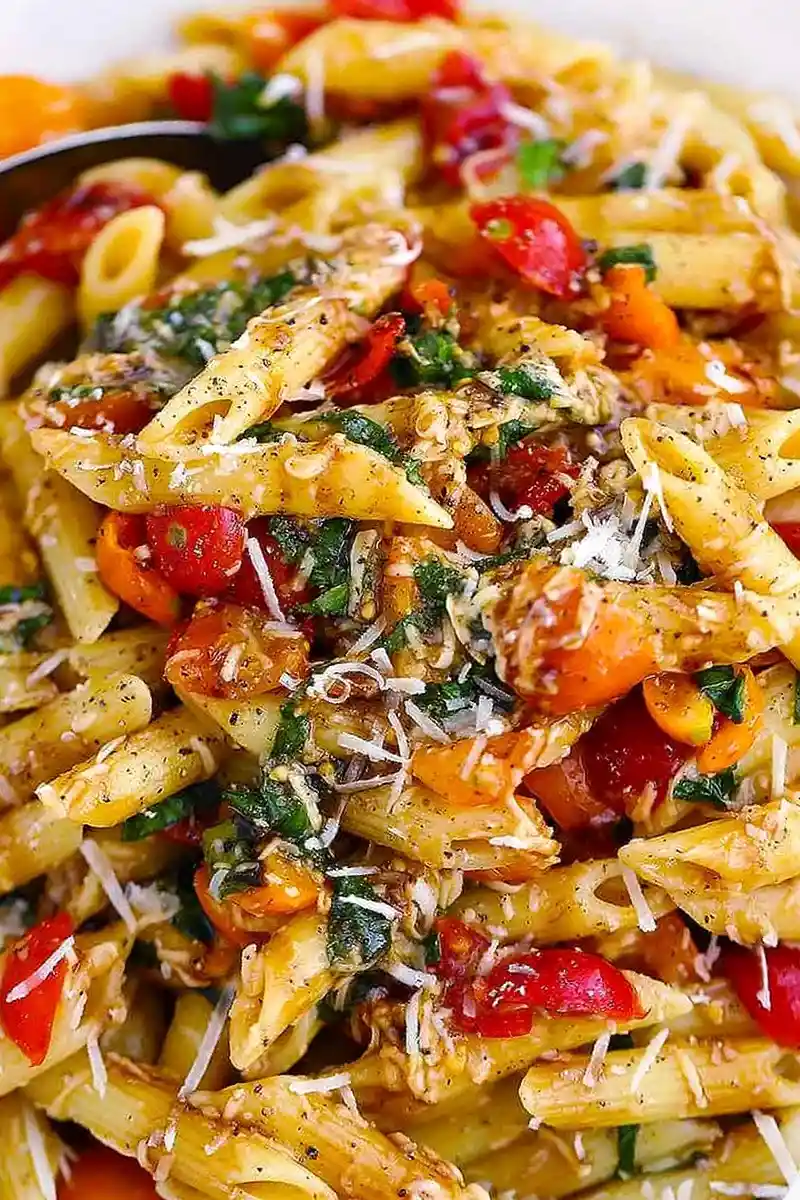
List of ingredients
- 8 oz. pasta (any variety, such as penne, spaghetti, or fusilli)
- 2 cloves garlic (minced finely)
- 1/4 cup extra-virgin olive oil (use a high-quality oil for better taste)
- 1 tablespoon balsamic vinegar (aged balsamic provides a sweeter flavor)
- 1/2 cup fresh basil leaves (cut into chiffonade or roughly chopped)
- 2 cups chopped tomatoes (Roma or cherry tomatoes are recommended)
- 1/2 cup shredded parmesan cheese (ensure it uses microbial rennet)
- Kosher salt and black pepper (to taste)
step-by-step instructions
- Cook the Pasta: Bring a large pot of heavily salted water to a boil. Add the 8 oz. of pasta and cook according to the package directions until it reaches an al dente texture.
- Prepare the Bruschetta Mix: While the pasta is boiling, combine the 2 minced garlic cloves, 1/4 cup olive oil, 1 tablespoon balsamic vinegar, 1/2 cup fresh basil, 2 cups chopped tomatoes, 1/2 cup shredded parmesan, 1/2 teaspoon kosher salt, and 1/4 teaspoon black pepper in a large mixing bowl.
- Marinate the Ingredients: Stir the mixture occasionally while the pasta finishes cooking. This allows the flavors of the garlic and vinegar to blend with the fresh vegetables.
- Combine Pasta and Sauce: Use a slotted spoon to transfer the cooked pasta directly from the boiling water into the bowl with the bruschetta mixture. Alternatively, reserve 1/4 cup of the pasta water, drain the noodles, and stir the reserved water into the bowl.
- Rest the Dish: Mix everything together thoroughly. Let the pasta sit for approximately 5 minutes to allow the sauce to thicken and the noodles to absorb the flavors.
- Final Seasoning: Taste the pasta and add more salt or black pepper if needed. Serve immediately with additional fresh basil, parmesan, and black pepper as desired.
Pasta Selection and Preparation
Choosing the Right Pasta Shape
Short, tubular pasta like penne or rigatoni is highly effective for this recipe. These shapes trap the small pieces of tomato and garlic inside the tube. Fusilli or rotini are also excellent choices because their spirals hold onto the olive oil and balsamic dressing.
Using Gluten-Free Pasta Alternatives
You can substitute traditional wheat pasta with chickpea, brown rice, or lentil-based noodles. These alternatives provide additional protein and fiber while remaining compatible with the fresh ingredients. Be mindful that gluten-free pastas often have different boiling times and may release more starch.
The Importance of Salting Pasta Water
Adding a generous amount of salt to the boiling water is the only chance to season the interior of the pasta. This enhances the overall flavor of the dish before the sauce is added. Use kosher salt for a cleaner taste and consistent grain size.
Fresh Ingredient Tips
Selecting the Best Tomato Varieties
Roma tomatoes are the best choice for this dish because they have a meatier texture and lower water content. This helps maintain a thicker sauce consistency. Cherry or grape tomatoes provide a sweeter taste and work well when halved or quartered.
The Chiffonade Method for Fresh Basil
To achieve a professional chiffonade, stack several basil leaves on top of each other and roll them tightly into a cigar shape. Use a sharp knife to slice across the roll into thin ribbons. This prevents the leaves from bruising and keeps the flavor fresh.
Mincing Garlic for Maximum Flavor
Fresh garlic cloves provide a sharper and more aromatic taste than pre-minced jarred garlic. Use a microplane or a sharp chef’s knife to mince the garlic as finely as possible. This ensures the garlic is evenly distributed throughout the pasta without leaving large raw chunks.
Selecting a High-Quality Balsamic Vinegar
An aged balsamic vinegar is preferable because it has a syrupy consistency and a naturally sweeter profile. Cheaper vinegars can be overly acidic and may overpower the fresh basil. Check the label for an authentic Modena origin for the best quality.
Customizing the Recipe
Adding Plant-Based Proteins
Canned chickpeas or cannellini beans are great additions for increasing the protein content. Rinse and drain the beans thoroughly before stirring them into the final mixture. This makes the dish more filling and nutritionally balanced.
Incorporating Fresh Cheeses
Fresh mozzarella pearls or torn burrata cheese add a creamy contrast to the acidic tomatoes. Fold these in at the very end of the process to prevent them from melting completely. This adds a luxurious texture to the light summer sauce.
Adding Extra Vegetables for Nutrition
Baby spinach or wild arugula can be stirred in while the pasta is still hot. The residual heat will wilt the greens slightly without overcooking them. You can also add diced cucumbers or red onions for extra crunch.
Making the Dish Vegan
To make this recipe vegan, omit the parmesan cheese or replace it with a plant-based parmesan substitute. Nutritional yeast is another option for adding a salty, cheesy flavor. The remaining ingredients are naturally vegan.
Storage and Reheating Advice
Airtight Container Storage
Store leftover pasta in an airtight glass or plastic container in the refrigerator. This prevents the pasta from drying out and keeps the basil from oxidizing too quickly. The dish remains safe to eat for up to 24 hours.
Stovetop Reheating Techniques
Reheat the pasta in a pan over medium-low heat with a splash of water or olive oil. Stir gently to avoid breaking the noodles. Avoid overcooking during the reheating process to prevent the tomatoes from becoming mushy.
Cold Pasta Salad Transformation
This recipe works exceptionally well as a cold pasta salad. Simply store the cooked dish in the fridge and serve it chilled the next day. You may need to add a small drizzle of extra olive oil if the pasta has absorbed all the dressing.
Expert Troubleshooting
Managing Tomato Moisture
If your tomatoes are very juicy, the sauce may appear thin or watery. To fix this, blot the chopped tomatoes with a paper towel before adding them to the mixing bowl. This removes excess surface water while keeping the flavor intact.
Adjusting Vinegar Acidity
If the dish tastes too sharp, add a pinch of sugar or a small amount of extra olive oil. This balances the acidity of the balsamic vinegar. Tasting the sauce before adding the pasta allows you to make these adjustments early.
Preserving Basil Color
Basil can turn brown when exposed to acid or heat for too long. Add half of the basil to the mixing bowl and the other half as a garnish just before serving. This ensures the dish looks vibrant and green.
Serving Suggestions
Adding Grilled Chicken Breast
Slices of grilled chicken breast are a lean protein pairing that complements the flavors of the bruschetta. Season the chicken with salt, pepper, and a bit of dried oregano. Place the chicken on top of the plated pasta for a complete meal.
Complementary Vegetable Side Dishes
Serve this pasta with a side of roasted asparagus or sautéed zucchini. A simple side salad with a lemon vinaigrette also balances the richness of the olive oil and parmesan. These sides keep the meal light and healthy.
Garnishing with Toasted Pine Nuts
Toasted pine nuts add a buttery crunch and a nutty flavor to the dish. Toast them in a dry pan over medium heat for 2-3 minutes until golden brown. Sprinkle them over the pasta just before serving.
Common Questions
Can I make the tomato mixture in advance?
Yes, you can prepare the bruschetta mixture up to two hours before cooking the pasta. Store it in the refrigerator to let the flavors meld. Do not store it longer than two hours, or the tomatoes may become too soft and soggy.
Which parmesan substitute works best for vegans?
Cashew-based parmesan or store-bought vegan hard cheeses are excellent substitutes. These provide a similar salty and tangy profile. If you do not have vegan cheese, use a tablespoon of nutritional yeast mixed with salt.
How long does this dish stay fresh in the fridge?
The pasta is best consumed within 24 hours of preparation. After one day, the noodles tend to absorb the liquid and lose their structure. The fresh basil will also begin to wilt and lose its bright color.
Can I use dried basil instead of fresh?
Dried basil can be used in a pinch, but the flavor is significantly different. Use one teaspoon of dried basil for every tablespoon of fresh basil. Rub the dried herbs between your palms to release the essential oils before adding them.
Print
Quick Bruschetta Pasta with Fresh Tomatoes and Basil
- Total Time: 15 minutes
- Yield: 4 servings 1x
- Diet: Vegetarian
Description
This Bruschetta Pasta with fresh tomatoes, basil, garlic, and olive oil comes together in 15 minutes for an easy vegetarian dinner recipe!
Ingredients
- 8 oz. pasta
- 2 cloves garlic, minced
- 1/4 cup extra-virgin olive oil
- 1 tablespoon balsamic vinegar
- 1/2 cup fresh basil leaves, chopped
- 2 cups chopped tomatoes
- 1/2 cup shredded microbial-rennet parmesan cheese
- kosher salt
- black pepper
Instructions
- Step 1: Bring a heavily salted pot of water to a boil. Add the pasta and cook according to directions until al dente.
- Step 2: In a large bowl, mix minced garlic, olive oil, balsamic vinegar, fresh basil, chopped tomatoes, shredded microbial-rennet parmesan cheese, 1/2 teaspoon kosher salt, and 1/4 teaspoon black pepper. Set aside while pasta cooks.
- Step 3: Use a slotted spoon to transfer the cooked pasta directly from the pot to the bowl with the bruschetta mixture.
- Step 4: Mix everything together and allow to sit for about 5 minutes to absorb the flavors and thicken.
- Step 5: Taste and season to taste if needed, then serve with extra basil, parmesan, and black pepper if desired.
Notes
Allow the pasta to sit for a few minutes so the sauce thickens. Using Roma tomatoes can reduce wateriness. High-quality aged balsamic vinegar is recommended for a sweeter flavor. Leftovers can be served cold within 24 hours.
- Prep Time: 10 minutes
- Cook Time: 10 minutes
- Category: Pasta
- Method: Boiling
- Cuisine: Italian
Nutrition
- Serving Size: 1 serving
- Calories: 399 kcal
- Sugar: 4 g
- Sodium: 209 mg
- Fat: 18 g
- Saturated Fat: 4 g
- Unsaturated Fat: 14 g
- Trans Fat: 0 g
- Carbohydrates: 47 g
- Fiber: 3 g
- Protein: 13 g
- Cholesterol: 9 mg