
This quick and flavorful chicken fried rice is a perfect weeknight dinner that rivals takeout. By using a few simple pantry staples and a specific seasoning trick, you can achieve a deep, savory taste in under 30 minutes.
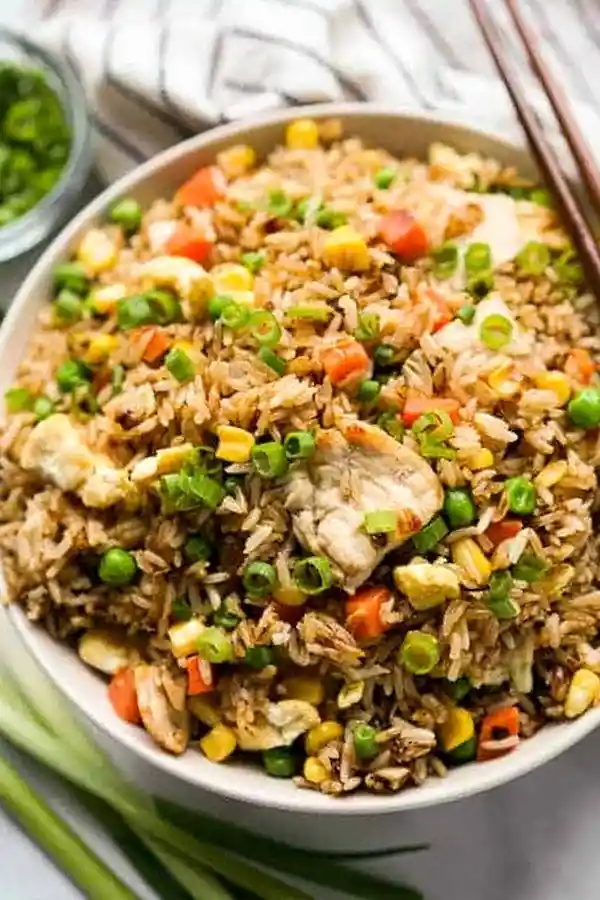
List of ingredients
- 4 cups cooked rice – preferably chilled overnight.
- 3/4 lbs chicken breast (~1 large piece) – sliced into thin strips.
- 1/4 teaspoon salt – used for seasoning the chicken.
- Vegetable or canola oil – for high-heat frying.
- 2 eggs – beaten in a bowl.
- 1/2 cup diced white or yellow onion – finely chopped.
- 4-6 cloves garlic – minced.
- 1 cube chicken bouillon – crushed for intense flavor.
- 2 tsp soy sauce – for saltiness and color.
- 1 tsp sesame oil – optional for a nutty aroma.
- 1/2 tsp black pepper – for a hint of spice.
- 2 cups frozen mixed vegetable – such as peas, carrots, and corn.
- 2 tbsp green onions – sliced for garnish.
step-by-step instructions
- Prepare Protein: Slice chicken into thin strips. Sprinkle with salt and rub it evenly all over the chicken. Beat two eggs in a bowl.
- Cook Eggs: Heat a skillet under medium heat and add vegetable or canola oil. Once the oil is heated, add the beaten eggs.
- Set Aside Eggs: When the bottom of the egg mixture is cooked, flip and cook the other side. Once eggs are no longer liquid, break them into small pieces, remove from the skillet, and set aside.
- Sear Chicken: Heat the skillet under high heat and add more vegetable or canola oil. Add the chicken pieces and stir and flip occasionally until cooked through. Remove the chicken and set aside.
- Sauté Aromatics: Add 1-2 tbsp of vegetable or canola oil to the skillet. Once heated, add the diced onions and minced garlic.
- Fry Rice: Once onions and garlic are fragrant but not browned, add the cooked rice. Break apart any rice chunks with your spatula.
- Season: Stir continuously for 30 seconds, then add the chicken bouillon, soy sauce, sesame oil, and black pepper. Stir continuously for one minute until everything is well mixed.
- Incorporate Vegetables: Add the frozen mixed vegetables to the pan. Stir to combine for 1-2 minutes.
- Combine All: Add the previously cooked chicken pieces and egg pieces back into the skillet. Stir everything together.
- Finish and Serve: Remove from heat. Garnish with sliced green onions and serve immediately.
Essential Equipment for Stir-Frying
Choosing a High-Heat Pan
A carbon steel wok or a heavy-bottomed cast iron skillet is ideal because they retain heat efficiently. This ensures that the rice sears quickly rather than steaming, which prevents the grains from becoming mushy. If using a non-stick pan, ensure it is rated for high heat to avoid damaging the coating.
The Importance of a Heat-Resistant Spatula
A wide metal turner or a high-heat silicone spatula is necessary for this recipe. You need a tool that can scrape the bottom of the pan effectively to break up rice clumps. Wood is also a good option, though it may not be as effective for breaking apart hardened chilled rice.
Temperature Control Techniques
To check if your pan is ready, look for a slight shimmer in the oil or a tiny wisp of smoke. Adding ingredients to a cold pan causes them to soak up oil and stick, which ruins the texture. Always ensure the pan returns to a high heat after each batch of ingredients is removed.
The Science of Perfect Fried Rice
Utilizing Day-Old Refrigerated Rice
Freshly cooked rice contains too much surface moisture and starch, which leads to clumping and a sticky texture when fried. Refrigerating rice for 24 hours allows the starches to undergo retrogradation, making the grains firmer and drier. This ensures each grain is coated in oil and seasonings individually.
Quick-Chilling Fresh Rice
If you do not have day-old rice, spread freshly cooked rice on a large baking sheet in a thin layer. Place the sheet in the freezer for 15-20 minutes to flash-cool the surface and remove excess moisture. This prevents the rice from turning into a paste during the stir-frying process.
Managing the Starch Balance
Avoid over-stirring the rice once the seasonings are added, as excessive agitation can break the grains. Use a folding motion with your spatula to incorporate the soy sauce and bouillon. This maintains the structural integrity of the rice grains for a professional finish.
Flavor Enhancements and Modifications
The Impact of Chicken Bouillon
Using a concentrated bouillon cube instead of just soy sauce adds a layer of savory umami depth to the dish. Bouillon provides a more complex salty profile that penetrates the rice grains more effectively than liquid seasonings. Ensure the cube is crushed into a powder for even distribution.
Optimizing the Sauté Sequence
Adding garlic and onions after the protein is removed prevents the aromatics from burning during the high-heat chicken sear. Garlic burns quickly and becomes bitter, so it should only be cooked until fragrant. This sequence ensures the sweetness of the onion and the punch of the garlic are preserved.
Customizing Protein Choices
While chicken breast is used here, chicken thighs provide more moisture and a richer flavor. You can also substitute tofu or shrimp for a different protein profile. If using shrimp, cook them very quickly on high heat to avoid a rubbery texture before setting them aside.
Adding Spicy Elements
For those who prefer heat, add a teaspoon of red pepper flakes or sriracha during the seasoning step. You can also add sliced fresh chilies along with the garlic and onions. This integrates the spice throughout the rice rather than just adding it as a topping.
Vegetable and Garnish Tips
Using Frozen vs Fresh Vegetables
Frozen mixed vegetables are convenient because they are blanched and freeze-dried, allowing them to cook quickly without releasing too much water. If using fresh carrots or peas, dice them very small and sauté them before adding the rice. This ensures they are fully cooked through by the time the rice is heated.
The Role of Green Onions
Green onions should be added at the very end as a garnish to maintain their bright color and crisp texture. The heat from the finished rice is enough to soften them slightly without losing their fresh, pungent flavor. Use both the white and green parts for a more complete flavor profile.
Incorporating Leafy Greens
Adding baby spinach or chopped bok choy can increase the nutritional value of the dish. Stir these in during the last minute of cooking so they wilt but do not become overcooked. These greens add a fresh contrast to the savory, fried elements of the meal.
Storage and Reheating Guidelines
Proper Cooling and Storage
Allow the fried rice to cool slightly before transferring it to an airtight container to prevent excess condensation. Store the rice in the refrigerator for up to 3 to 4 days. Keeping it in a shallow container helps it cool faster, which is safer for food storage.
Best Reheating Methods
The best way to reheat fried rice is in a skillet over medium-high heat with a teaspoon of oil. This restores the toasted texture of the grains and prevents them from becoming soft. If using a microwave, add a splash of water and cover the dish to steam the rice back to life.
Maintaining Texture After Storage
To avoid the rice becoming dry during reheating, stir it frequently to redistribute the remaining oils. If the rice seems too dry, a tiny drizzle of sesame oil during the reheat process can restore the aromatic quality. Avoid over-cooking during the reheating phase to prevent the eggs from becoming rubbery.
Troubleshooting Common Issues
Preventing Mushy Rice
If your rice is turning out mushy, it is likely due to using fresh rice or adding too much liquid seasoning. Ensure your rice is well-chilled and that you are using a high-heat setting on your stove. Stirring too frequently or using a pan that is too small can also cause steaming rather than frying.
Fixing Bland Flavor
If the dish lacks depth, increase the amount of chicken bouillon or add a pinch of sugar to balance the salt. A small amount of acidity, such as a teaspoon of rice vinegar, can also brighten the flavors. Ensure your soy sauce is fresh and not diluted.
Avoiding Burnt Garlic
If your garlic burns frequently, add a tablespoon of water or additional oil to the pan immediately after adding the minced cloves. This lowers the surface temperature slightly and allows the garlic to soften without charring. Always keep the rice ready to be added as soon as the garlic becomes fragrant.
Frequently Asked Questions
Can I use brown rice instead of white rice?
Yes, brown rice works well and adds more fiber and a nuttier flavor. However, brown rice is denser, so you may need to add a tablespoon of water or broth during the frying process to ensure it heats through completely.
How do I make this recipe gluten-free?
To make this dish gluten-free, replace the soy sauce with tamari or coconut aminos. Ensure that your chicken bouillon cube is certified gluten-free, as some brands use wheat-based fillers.
Can I use chicken thighs instead of breasts?
Chicken thighs are a great alternative and often result in a juicier final dish. Because thighs have more fat, you may need slightly less oil in the pan when searing the meat.
Why does my rice stick to the pan?
Sticking usually happens if the pan isn’t hot enough or if you are using too little oil. Make sure the oil is shimmering before adding the rice and stir continuously to keep the grains moving.
Print
Savory Chicken Fried Rice with Secret Seasoning
- Total Time: 20 minutes
- Yield: 4 servings 1x
- Diet: General
Description
Easy, quick and flavorful rice stir fry with chicken pieces, egg and mixed vegetables. The perfect yummy and simple dinner for any day!
Ingredients
- 4 cups cooked rice
- 3/4 lbs chicken breast
- 1/4 tsp salt
- vegetable or canola oil
- 2 eggs
- 1/2 cup diced white or yellow onion
- 4–6 cloves garlic, minced
- 1 cube chicken bouillon
- 2 tsp soy sauce
- 1 tsp sesame oil (optional)
- 1/2 tsp black pepper
- 2 cups frozen mixed vegetable
- 2 tbsp green onions, sliced
Instructions
- Step 1: Slice chicken into thin strips. Sprinkle with salt and rub it evenly all over chicken. Beat two eggs in a bowl.
- Step 2: Heat skillet under medium heat. Add vegetable or canola oil to skillet. Once oil is heated, add eggs to skillet.
- Step 3: When the bottom of the egg mixture is cooked, flip and cook the other side. Once eggs are no longer in liquid form, break it into small pieces. Remove from skillet and set aside.
- Step 4: Heat skillet under high heat. Add vegetable or canola oil to skillet. Add chicken pieces. Stir and flip occasionally until chicken is cooked. Remove and set aside.
- Step 5: Add 1-2 tbsp vegetable or canola oil to skillet. Once oil is heated, add diced onions and minced garlic.
- Step 6: Once onions and garlic are fragrant (do not brown or burn), add cooked rice. Break apart rice if it is in chunks.
- Step 7: Stir continuously for 30 seconds, then add chicken bouillon, soy sauce, sesame oil, black pepper. Stir continuously for a minute, or until everything is mixed well.
- Step 8: Add frozen mixed vegetables. Stir to combine for 1-2 minutes.
- Step 9: Add chicken pieces and egg/omelette pieces that was previously set aside back into the skillet. Stir to combine.
- Step 10: Remove from heat. Garnish with green onions.
- Step 11: Serve and enjoy!
Notes
Use day-old refrigerated rice for the best texture to prevent it from becoming mushy. Cook on high heat and stir continuously for a professional stir-fry finish.
- Prep Time: 10 minutes
- Cook Time: 10 minutes
- Category: Main Course
- Method: Stir fry
- Cuisine: Asian
Nutrition
- Serving Size: 1 serving
- Calories: 504 kcal
- Sugar: 1 g
- Sodium: 345 mg
- Fat: 16 g
- Saturated Fat: 10 g
- Unsaturated Fat: 6 g
- Trans Fat: 0 g
- Carbohydrates: 60 g
- Fiber: 5 g
- Protein: 29 g
- Cholesterol: 136 mg