
This one-pan meal combines juicy chicken thighs and tender roasted potatoes for an efficient weeknight dinner. It requires minimal preparation and utilizes simple ingredients to create a bright, citrusy flavor profile.
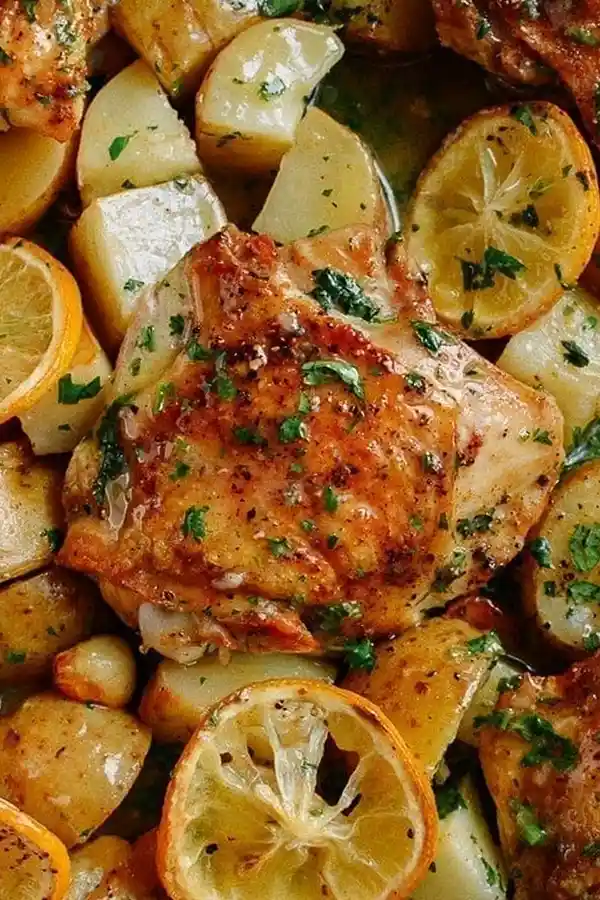
List of ingredients
- 6 bone-in, skin-on chicken thighs – provide maximum flavor and moisture.
- salt and freshly ground black pepper – for basic seasoning.
- 1/4 cup olive oil – used for searing and roasting.
- 1 1/2 pounds Eastern or Yukon Gold potatoes – scrubbed and cut into 1-inch chunks.
- 1 lemon – sliced into rounds.
- 10 cloves garlic – peeled and kept whole.
- 1/4 cup chopped cilantro or parsley leaves – for a fresh finish.
step-by-step instructions
- Prepare the Oven and Meat: Preheat your oven to 425 degrees F, and season the chicken thighs with salt and pepper.
- Sear the Chicken: Heat the olive oil in a roasting pan set over two burners at medium high heat. Sear the chicken skin-side down in the roasting pan for about 5-7 minutes, then flip them over.
- Combine Vegetables: Add the potatoes and stir them in the oil. Add the lemon slices and garlic cloves, tossing everything together so the potatoes and garlic are well-coated in olive oil.
- Roast: Transfer the chicken and vegetables to the oven and cook for another 30 minutes, or until the chicken is cooked through and the potatoes are tender.
- Finish and Serve: Remove the pan from the oven and stir in the fresh herbs before serving.
Optimizing Your Roasting Results
Choosing the Right Potatoes for Roasting
Yukon Gold or Eastern potatoes are ideal because they hold their shape well while developing a creamy interior. Their medium starch content allows the edges to crisp up in the chicken fat without falling apart. Avoid using very waxy red potatoes if you prefer a fluffier texture.
Achieving the Crispiest Chicken Skin
Pat the chicken skin completely dry with paper towels before seasoning. Moisture on the surface creates steam, which prevents the skin from browning and becoming crisp. Searing skin-side down first ensures a golden-brown finish and renders the fat for the potatoes.
Controlling Oven Hot Spots
Most home ovens have uneven heat distribution, which can lead to some potatoes being burnt while others stay hard. Rotate your roasting pan 180 degrees halfway through the 30-minute roasting period. This ensures an even cook for all chicken thighs and vegetable chunks.
Ingredient Substitutions and Tweaks
Swapping Bone-In Thighs for Boneless
If you use boneless, skin-on chicken thighs, reduce the roasting time by approximately 10 to 15 minutes. Boneless meat cooks faster and is more prone to drying out if left in the oven too long. Monitor the internal temperature closely to avoid overcooking.
Alternative Herb Options
While cilantro and parsley provide a fresh contrast, rosemary or thyme are excellent alternatives for a more earthy flavor. Add woody herbs like rosemary during the roasting process rather than at the end. Fresh soft herbs should always be added last to maintain their bright color.
Using Different Cooking Oils
Avocado oil or grapeseed oil can replace olive oil if you prefer a higher smoke point. These oils are stable at 425 degrees F and will not impart a strong flavor to the dish. Stick to fats that are liquid at room temperature for the best coating coverage.
Serving Suggestions for a Complete Meal
Pairing with Fresh Garden Salads
A crisp green salad with a light vinaigrette cuts through the richness of the roasted chicken and potatoes. Mix olive oil, lemon juice, a touch of honey, and dijon mustard for a complementary dressing. This adds a refreshing element to the heavy roast.
Adding Steamed Green Vegetables
Steamed asparagus, sautéed spinach, or roasted broccoli provide essential nutrients and color to the plate. Roast the vegetables on a separate tray if they require a different cooking time. Adding greens ensures a balanced meal with plenty of fiber.
Grains to Complement the Dish
While potatoes are the primary starch, serving the chicken over a bed of quinoa or wild rice can add variety. The grains will soak up the lemon-garlic juices remaining in the roasting pan. This makes the meal more filling for larger appetites.
Storage and Preservation Tips
Refrigerating Leftovers Safely
Store leftover chicken and potatoes in airtight glass or plastic containers. Ensure the food has cooled slightly before sealing to prevent excessive condensation. Refrigerate immediately and keep the meal for up to three to four days.
Freezing Roasted Chicken and Potatoes
Roasted chicken freezes well, but roasted potatoes often lose their texture and become grainy upon thawing. If you plan to freeze, consider freezing only the chicken. Thaw in the refrigerator overnight before reheating to maintain safety and quality.
Reheating Methods for Best Texture
Using the Oven for Crispy Results
To maintain the crispness of the chicken skin and potatoes, reheat them in the oven at 350 degrees F. Place the leftovers in a shallow baking dish and heat for 10 to 15 minutes. This method prevents the food from becoming soggy.
Microwave Quick Reheating
The microwave is faster but can make the chicken rubbery and the potatoes soft. To mitigate this, cover the dish with a damp paper towel to trap moisture. Heat in short 1-minute intervals, stirring the potatoes in between.
Meal Prep and Make-Ahead Advice
Pre-Cutting Potatoes and Garlic
You can chop the potatoes and peel the garlic up to 24 hours in advance. Store the cut potatoes in a bowl of cold water in the refrigerator to prevent browning. Drain and pat them completely dry before adding them to the hot oil.
Marinating the Chicken Overnight
For deeper flavor, toss the chicken thighs in olive oil, salt, and pepper the night before. Keep them in a sealed container or bag in the refrigerator. This allows the salt to penetrate the meat, improving both seasoning and juiciness.
Troubleshooting Common Issues
Fixing Undercooked Potatoes
If the chicken is done but the potatoes are still firm, remove the chicken from the pan. Return the potatoes to the oven for another 10 to 15 minutes at 425 degrees F. Ensure the potato chunks are cut uniformly to 1 inch to avoid this issue.
Preventing Garlic from Burning
Whole peeled garlic cloves are less likely to burn than minced garlic. If you notice the garlic browning too quickly, toss the vegetables to move the cloves from the bottom of the pan. You can also tuck the garlic under the chicken thighs for protection.
Avoiding Dry Chicken Meat
Using bone-in, skin-on thighs is the best way to prevent dryness because the bone and skin protect the meat. If you find the meat is drying out, check your oven temperature with a thermometer. An oven that runs too hot can overcook the exterior before the interior is done.
Frequently Asked Questions
Can I use a different type of lemon?
Yes, Meyer lemons are a great substitute as they are sweeter and more aromatic. Standard Eureka or Lisbon lemons provide a sharper, more acidic punch. Both work well depending on your preference for tartness.
Do I have to sear the chicken first?
Searing is optional but highly recommended for the best texture and flavor. If you skip it, you can place everything in the pan and roast, but the skin will be softer. You may need to add 5 to 10 minutes to the total roasting time.
How do I know when the chicken is safe to eat?
The safest way to check is using a meat thermometer. The internal temperature of the chicken thighs should reach 165 degrees F (74 degrees C) at the thickest part. Avoid relying solely on the color of the juices.
Can I use frozen potatoes?
Frozen pre-cut potatoes can work, but they often release more water, which may steam the chicken rather than roast it. If using frozen, roast them separately first or ensure they are completely thawed and dried before adding them to the pan.
What if I don’t have a roasting pan?
A large cast-iron skillet or a rimmed baking sheet can be used instead. If using a baking sheet, you will need to sear the chicken in a separate frying pan first. Transfer both the seared chicken and vegetables to the sheet for roasting.
Print
Roasted Lemon Chicken Thighs with Potatoes
- Total Time: 40 minutes
- Yield: 6 servings 1x
- Diet: General
Description
Roasted Lemon Chicken Thighs with Potatoes is a one-pan dinner prepared in 5 minutes with only 7 ingredients. Lemon Chicken Thighs are a quick and easy meal.
Ingredients
- 6 bone-in, skin-on chicken thighs
- salt and freshly ground black pepper
- 1/4 cup olive oil
- 1 1/2 pounds Eastern or Yukon Gold potatoes, scrubbed and cut into 1-inch chunks
- 1 lemon, sliced
- 10 cloves garlic, peeled
- 1/4 cup chopped cilantro or parsley leaves
Instructions
- Prep: Preheat your oven to 425 degrees F, and season the chicken thighs with salt and pepper. Heat the olive oil in a roasting pan set over two burners at medium high heat.
- Sear: Sear the chicken skin-side down in the roasting pan. After the chicken thighs have been searing for about 5-7 minutes, flip them over. Add the potatoes and stir them in the oil. Add the lemon slices and garlic cloves, tossing everything together so the potatoes and garlic are well-coated in olive oil.
- Roast: Transfer the chicken to the oven and cook for another 30 minutes, or until the chicken is cooked through and the potatoes are tender. Remove from the oven and stir in the herbs. Serve.
Notes
The potatoes absorb the chicken-y flavor from being roasted in the same pan.
- Prep Time: 5 minutes
- Cook Time: 35 minutes
- Category: Chicken and Poultry
- Method: Roasting
- Cuisine: American
Nutrition
- Serving Size: 1 serving
- Calories: 406 kcal
- Sugar: 1 g
- Sodium: 489 mg
- Fat: 28 g
- Saturated Fat: 6 g
- Unsaturated Fat: 22 g
- Trans Fat: 0 g
- Carbohydrates: 18 g
- Fiber: 4 g
- Protein: 22 g
- Cholesterol: 111 mg