
This creamy pasta blends the bold heat of Calabrian chilies with the cool richness of fresh burrata. It is a fast-cooking meal that balances spicy, sweet, and zesty flavors in a simple pan sauce.
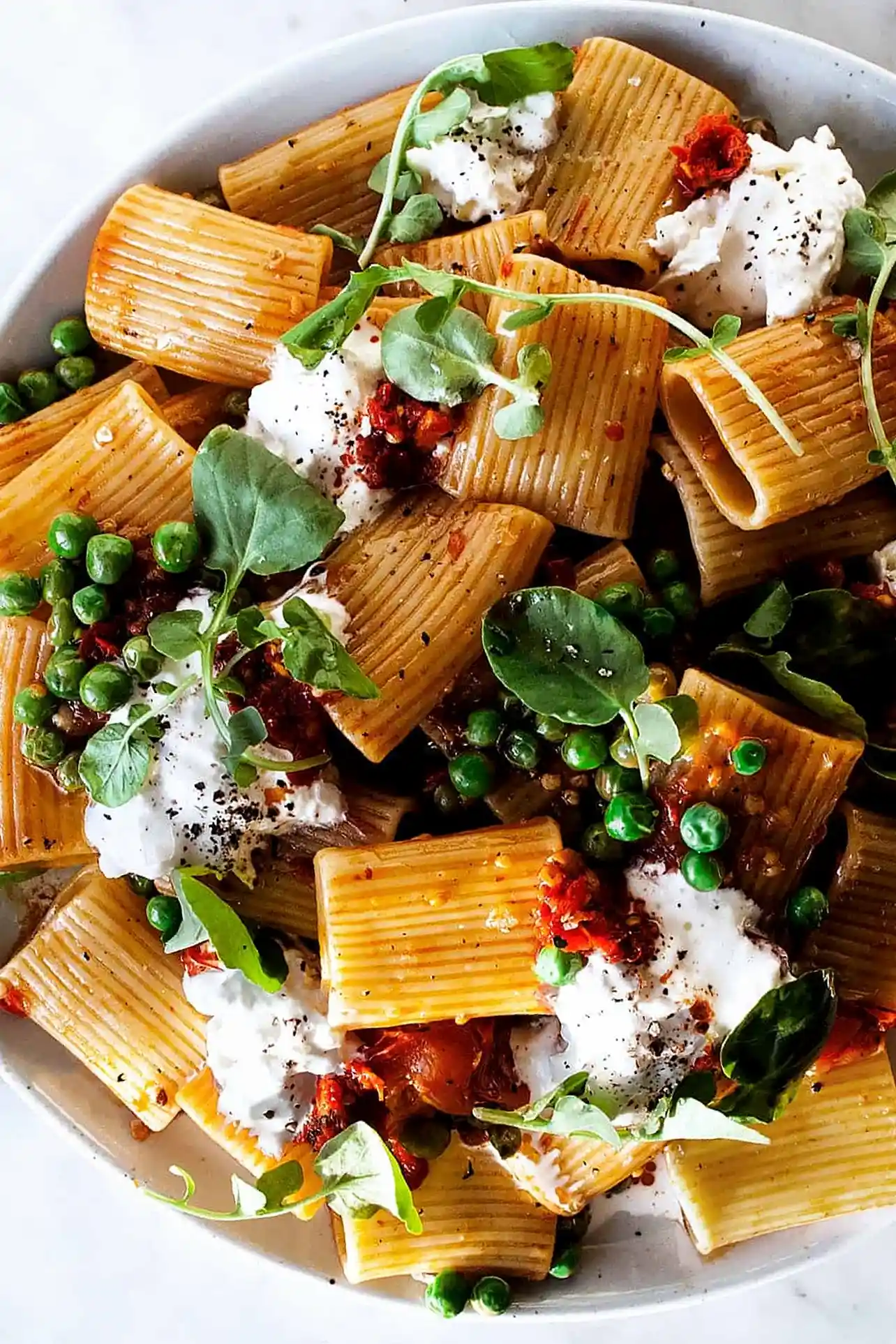
List of ingredients
- 1 lb paccheri pasta (or other wide-shaped pasta) – choose a shape that holds sauce well.
- kosher salt – used for seasoning the pasta water and final taste.
- 4 tbsp butter – divided for sautéing and finishing the sauce.
- 2 garlic cloves, minced – provides a fragrant aromatic base.
- 1-2 tbsp crushed Calabrian chilies in oil – adjust based on your preferred spice level.
- 2 tbsp honey – balances the heat of the chilies.
- 12 oz frozen peas, thawed – adds sweetness and a pop of color.
- ½ lemon, juiced – cuts through the richness with acidity.
- 1-2 balls burrata cheese – added at the end for a creamy texture.
- freshly cracked black pepper – for seasoning the cheese and pasta.
- watercress, to garnish – adds a peppery freshness to the dish.
step-by-step instructions
- Boil the Pasta: Bring a large pot of salted water to a boil. Cook the pasta for 2 minutes less than the package instructions. Ladle out ¾ cup of the pasta water and reserve it before draining the pasta.
- Sauté Aromatics: Heat a large, heavy-bottom pot or Dutch oven over medium heat. Add 2 tablespoons of the butter. Once melted, add the minced garlic and cook for about 15 seconds, ensuring it does not burn.
- Build the Base: Stir in the crushed Calabrian chilies and honey. Cook for a few seconds to let the flavors meld.
- Create the Sauce: Pour in the reserved pasta water and bring to a bubble. Let it simmer for one to two minutes until slightly reduced. Add the drained pasta to the pot and continue cooking for another 2 minutes until the pasta is fully cooked and coated in the sauce.
- Add Vegetables: Stir in the thawed peas and the remaining 2 tablespoons of butter. Gently stir until the peas are heated through and the butter has completely melted.
- Finish and Season: Stir in the lemon juice. Taste the pasta and add kosher salt as needed.
- Plate and Serve: Transfer the pasta to a large, shallow bowl. Break the burrata balls across the top. Season the burrata with salt and freshly cracked black pepper, then garnish with fresh watercress.
Optimal Pasta Selection
Choosing Wide Pasta Shapes
Paccheri is ideal for this recipe because its wide, tubular shape captures the spicy sauce both inside and out. If you cannot find paccheri, rigatoni or calamarata are excellent substitutes. These shapes provide enough surface area to hold the emulsified butter sauce.
Managing Al Dente Timing
Cooking the pasta for two minutes less than the package directions is critical. This allows the pasta to finish cooking inside the sauce, which means it absorbs the chili and honey flavors directly. Overcooking the pasta in the water can lead to a mushy texture once it hits the pan.
The Role of Pasta Water
Reserved pasta water contains starch that acts as a natural thickener. When whisked with butter and lemon juice, it creates a glossy emulsion that clings to the noodles. Without this starch, the sauce would likely separate or pool at the bottom of the bowl.
Ingredient Substitutions and Variations
Alternative Spicy Peppers
If you do not have Calabrian chilies, you can use red pepper flakes soaked in olive oil or a small amount of Harissa paste. Calabrian chilies are unique for their fruity, tangy heat. To mimic this, add a pinch of smoked paprika to your alternative pepper choice.
Substituting Honey
Maple syrup or agave nectar can be used instead of honey to provide the necessary sweetness to balance the chilies. Ensure the substitute is a liquid sweetener so it integrates smoothly into the butter. Avoid granulated sugar, as it may not dissolve completely in the short simmering time.
Using Different Greens
Watercress provides a sharp, peppery contrast to the rich burrata. If watercress is unavailable, baby arugula or fresh spinach are practical alternatives. Arugula offers a similar peppiness, while spinach provides a milder, earthy tone.
Burrata Cheese Alternatives
Fresh mozzarella balls or a dollop of high-quality ricotta cheese can replace burrata. Burrata is preferred for its creamy center, which creates an instant sauce when broken. If using mozzarella, you may want to add an extra tablespoon of butter to the pasta to maintain the richness.
Fresh vs. Frozen Peas
Frozen peas are often superior in this dish because they retain their bright green color and sweetness. If using fresh peas, blanch them in boiling water for one minute before adding them to the pan. This ensures they are cooked through without overcooking the rest of the sauce.
Technical Cooking Tips
Preventing Garlic Burn
Garlic burns quickly over medium heat, which introduces a bitter taste to the sauce. Keep the garlic moving constantly with a wooden spoon for those 15 seconds. If the butter begins to brown too quickly, remove the pan from the heat for a moment.
Emulsifying the Butter Sauce
Adding the second portion of butter at the very end creates a technique known as monter au beurre. This gives the sauce a professional, velvety sheen and a richer mouthfeel. Stir gently but consistently to ensure the butter incorporates into the starch-water mixture.
Balancing Acidity
The lemon juice is added at the final step to keep the flavor bright and fresh. Adding acid too early can alter the way the honey and chilies interact. Always taste the dish before adding the lemon to determine if you need the full half-lemon or slightly less.
Serving and Presentation
Plating for Visual Impact
Use wide, shallow bowls to allow the pasta to spread out, making it easier to distribute the burrata. Place the burrata in the center and gently tear it open with a fork to let the cream spill over the noodles. This creates a visually appealing contrast between the red sauce and white cheese.
Recommended Side Dishes
A crisp green salad with a simple vinaigrette helps cut through the richness of the cheese. Garlic bread or a toasted focaccia is also an excellent accompaniment for soaking up any remaining spicy sauce. Avoid sides that are overly creamy to keep the meal balanced.
Non-Alcoholic Beverage Pairings
A sparkling water with a twist of lime complements the acidity of the lemon and the heat of the chilies. Iced tea with a hint of mint also works well to cleanse the palate between bites of rich burrata. For a more festive option, try a sparkling apple cider.
Storage and Reheating
Storing Leftover Pasta
Store the pasta in an airtight container in the refrigerator for up to three days. It is best to store the pasta and sauce together, but keep any remaining burrata in its original container. The burrata will lose its structural integrity if stored mixed with the hot pasta.
Reheating for Best Texture
Reheat the pasta in a pan over low heat rather than in the microwave. Add a splash of water or a small knob of butter to loosen the sauce and restore the emulsion. Microwave reheating can often make the pasta rubbery and the sauce oily.
Handling Leftover Burrata
Once burrata is opened, it should be consumed within 24 to 48 hours. When serving leftovers, do not reheat the cheese. Instead, place a fresh piece of burrata or a spoonful of ricotta on top of the hot, reheated pasta.
Make-Ahead Advice
Preparing the Base Sauce
You can mince the garlic and measure out the honey and chilies a day in advance. Store these in a small prep bowl in the refrigerator. This reduces the active cooking time to under 15 minutes.
Pre-thawing Ingredients
Thaw the frozen peas in a colander under cool running water. Pat them dry with a paper towel before adding them to the pot. This prevents excess water from thinning out the sauce during the final stir-in phase.
Troubleshooting Common Issues
Fixing a Thin Sauce
If the sauce is too watery, simmer the pasta water and butter mixture for an extra minute before adding the noodles. If it is still too thin after adding the pasta, stir in a tablespoon of grated parmesan cheese. The cheese will help bind the liquid and thicken the consistency.
Reducing Excessive Heat
If the Calabrian chilies make the dish too spicy, increase the amount of honey by one teaspoon. Adding more burrata cheese can also neutralize the heat, as the fats in the cream coat the tongue and dampen the spice. A squeeze of extra lemon can also help brighten and distract from the heat.
Preventing Overcooked Pasta
If the pasta feels too soft, you may have boiled it too long before adding it to the sauce. To prevent this in the future, test the pasta one minute before the package says it is al dente. Remember that the two minutes in the pan with the bubbling sauce will finish the cooking process.
Frequently Asked Questions
Can I use a different cheese if I can’t find burrata?
Yes, fresh mozzarella or buffalo mozzarella are the closest substitutes. For a creamier result, you can use a dollop of ricotta or mascarpone, though these will change the texture of the dish slightly.
Do I have to thaw the frozen peas?
Thawing the peas is recommended so they heat through quickly without cooling down the rest of the pasta. However, if you are in a rush, you can add them frozen, but you will need to cook them in the pan for an additional 60-90 seconds.
How do I find Calabrian chilies?
These are typically found in the international or Italian section of grocery stores, often sold in jars as crushed chilies in oil. If you cannot find them, check specialty Italian markets or online retailers.
Can this be made gluten-free?
Yes, you can replace the paccheri with a gluten-free pasta of your choice, such as brown rice or chickpea pasta. Be cautious with gluten-free pasta water, as the starch levels differ and may require a slightly longer reduction time to thicken the sauce.
Print
Spicy Calabrian Chile and Burrata Pasta with Peas
- Total Time: 25 minutes
- Yield: 4 servings 1x
- Diet: Vegetarian
Description
An easy, spicy Calabrian chile & burrata pasta with peas and a simple pan sauce.
Ingredients
- 1 lb paccheri pasta (or other wide-shaped pasta)
- kosher salt, as needed
- 4 tbsp butter
- 2 garlic cloves, minced
- 1–2 tbsp crushed Calabrian chilies in oil
- 2 tbsp honey
- 12 oz frozen peas, thawed
- ½ lemon, juiced
- 1–2 balls burrata cheese
- freshly cracked black pepper
- watercress, to garnish
Instructions
- Boil and Prep: Bring a large pot of salted water to a boil. Cook the pasta for 2 minutes less than the package instructions. Ladle out ¾ cup of the pasta water and reserve. Drain the pasta.
- Sauté Garlic: Heat a large, heavy-bottom pot (or Dutch oven) over medium heat. Add 2 tablespoons of the butter. Once melted, add the garlic and let cook for about 15 seconds.
- Add Aromatics: Add the crushed Calabrian chilies and honey. Cook for another few seconds.
- Simmer and Combine: Pour in the reserved pasta water. Bring to a bubble and let simmer until slightly reduced, just a minute or two. Add in the drained pasta and continue to cook for another 2 minutes until the pasta is fully cooked and the sauce begins to coat the pasta.
- Mix in Peas: Stir in the peas and the remaining butter. Let the peas heat through and butter melt as you gently stir the pasta.
- Final Seasoning: Add the lemon juice. Taste the pasta and season with salt as needed.
- Plating: Plate the pasta in a large, shallow bowl. Break the burrata across the top. Season the burrata with salt and freshly cracked black pepper. Garnish with the watercress.
Notes
Use microbial-rennet burrata cheese for a clean dietary option. Adjust the amount of crushed Calabrian chilies to control the heat level.
- Prep Time: 10 minutes
- Cook Time: 15 minutes
- Category: Main Course
- Method: Stovetop
- Cuisine: Italian
Nutrition
- Serving Size: 1 bowl
- Calories: 750 kcal
- Sugar: 8 g
- Sodium: 850 mg
- Fat: 32 g
- Saturated Fat: 18 g
- Unsaturated Fat: 14 g
- Trans Fat: 0 g
- Carbohydrates: 65 g
- Fiber: 7 g
- Protein: 22 g
- Cholesterol: 95 mg