
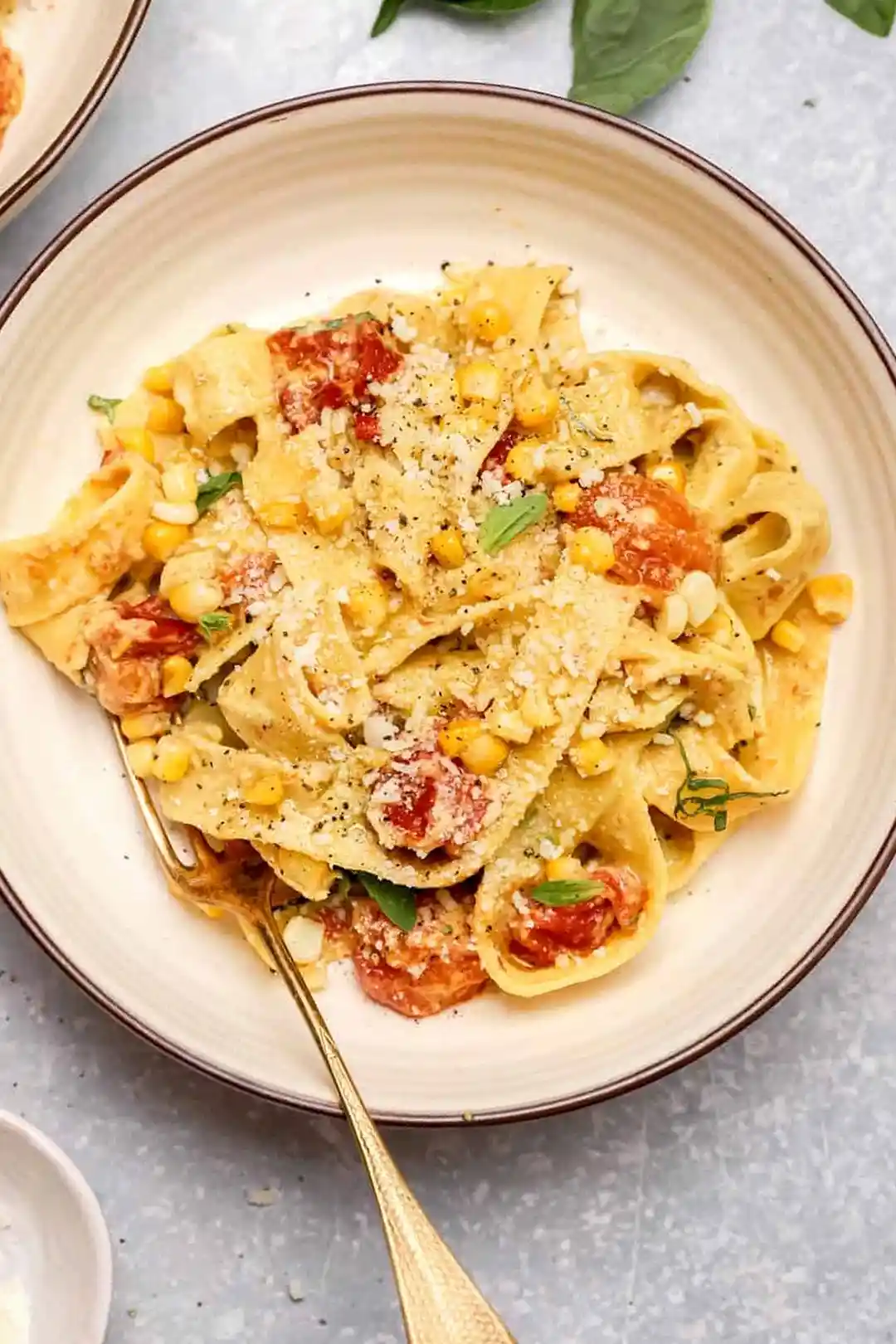
This seasonal pasta dish combines fresh summer corn and blistered tomatoes with a velvety basil cream sauce. It is a practical, vegetarian-friendly meal that brings restaurant-quality flavors to your home kitchen.
List of ingredients
- 4 Tbsp extra virgin olive oil, divided, plus more for serving – used for sautéing and finishing.
- 2 ears of corn, shucked and kernels removed – provides the base for the creamy sauce.
- 1/4 cup water – used to assist in the cooking process.
- 1/3 cup mascarpone cheese – adds richness and a velvety texture.
- 1/2 cup packed basil, plus more for garnish – provides the fresh, aromatic green flavor.
- 2 cups cherry tomatoes – for a sweet, acidic contrast.
- 1/2 medium red onion, thinly sliced – adds a savory depth.
- 1 (8.8 oz) bag pappardelle pasta – wide noodles that hold heavy sauces well.
- 1/4 cup Parmigiano Reggiano, grated, plus more for serving – adds saltiness and umami.
- Kosher salt – for seasoning throughout the dish.
- Freshly cracked black pepper – for a sharp, spicy finish.
- Flaky sea salt – used as a final seasoning touch.
step-by-step instructions
- Boil the water: Bring a large pot of water to a rapid boil. Season the water generously with about 2 Tbsp of Kosher salt.
- Cook the pasta: Add the pappardelle to the boiling water, using tongs or a spatula to break up the pasta nests. Cook for 9 minutes, or until the pasta is al dente.
- Save the liquid: Reserve approximately 1/2 cup of the pasta cooking water before draining. Drain the pasta and set it aside.
- Sauté corn and onion: Heat 2 Tbsp of olive oil in a large skillet over medium-high heat. Add the sliced red onion and sauté for 2 minutes until translucent, then add the corn kernels, 1 tsp Kosher salt, and 1/4 tsp black pepper, sautéing for another 3 minutes.
- Create the cream sauce: Transfer the sautéed corn and onion to a blender or food processor, but reserve 1/4 cup of the corn kernels. Add 1/3 cup mascarpone cheese and 1/2 cup packed basil, then blend for 20-30 seconds until very smooth, adjusting seasoning as needed.
- Blister the tomatoes: Heat the remaining 2 Tbsp of olive oil in a large skillet over high heat. Add cherry tomatoes and 1/2 tsp Kosher salt, cooking for 6-8 minutes while stirring often until the tomatoes blister and pop.
- Combine and toss: Over medium heat in the skillet, combine the cooked pasta, blistered tomatoes, basil cream sauce, reserved corn kernels, and 1/4 cup Parmigiano Reggiano. Toss thoroughly and add 1/4 cup of reserved pasta water to reach the desired consistency.
- Final plating: Divide the pasta among bowls. Drizzle with extra virgin olive oil and garnish with extra Parmesan, sliced basil, cracked black pepper, and a pinch of flaky sea salt.
Choosing the Best Pasta Shapes
Pappardelle’s Wide Surface Area
Pappardelle noodles are exceptionally wide, which makes them ideal for thick, cream-based sauces. The broad surface area allows the corn and basil cream to cling to the pasta rather than sliding off. This results in a more balanced distribution of flavor in every bite.
Substituting with Fettuccine or Tagliatelle
If pappardelle is unavailable, fettuccine or tagliatelle are the best alternatives. These ribbons are slightly narrower but still provide enough surface area to support a creamy sauce. Ensure you adjust the cooking time based on the specific thickness of the substitute noodles.
Using Gluten-Free Pasta Alternatives
For a gluten-free version, use a high-quality brown rice or chickpea pappardelle. Be cautious not to overcook these varieties, as they can become mushy more quickly than wheat pasta. Rinsing gluten-free pasta slightly can also help remove excess surface starch that might make the sauce too gummy.
Optimizing Your Fresh Corn
Selecting Peak-Season Sweet Corn
Choose corn with bright green, tight-fitting husks and moist kernels. Avoid ears with loose husks or dried-out tips, as these indicate the corn is past its prime. Fresh, sweet corn provides the natural starches necessary to thicken the sauce without needing heavy cream.
Proper Kernel Removal Technique
To remove kernels cleanly, stand the corn upright in a large bowl or a Bundt pan. Slice downward from the top of the cob to the bottom, ensuring you don’t cut too deep into the woody core. This method prevents kernels from scattering across your countertop.
Using Frozen Corn in a Pinch
If fresh corn is out of season, frozen sweet corn is a viable substitute. Thaw the corn completely and pat it dry with paper towels before sautéing. This prevents the sauce from becoming too watery and ensures the kernels brown properly in the skillet.
Mastering the Creamy Basil Sauce
The Role of Mascarpone in Texture
Mascarpone is a thick, buttery cheese that creates a luxurious mouthfeel. Unlike heavy cream, it adds a subtle tang and a dense consistency that stabilizes the sauce. For the best results, use a mascarpone made with microbial rennet to ensure it meets dietary preferences.
Achieving a Smooth Puree
When blending the corn, onion, and basil, use a high-speed blender for the smoothest result. Process for exactly 20-30 seconds to avoid over-processing, which can cause the sauce to heat up and lose its vibrant color. Taste the puree before adding it to the pan to ensure the salt levels are correct.
Balancing Fresh Basil Flavors
Fresh basil can vary in intensity depending on the variety and age of the leaves. Start with the recommended half-cup and adjust based on your preference. Adding a small amount of lemon juice can brighten the basil flavor if the sauce feels too heavy.
Perfecting Blistered Tomatoes
High Heat for Maximum Char
The key to blistered tomatoes is using high heat and a high-smoke-point oil. The high temperature causes the skins to tighten and burst quickly, creating charred spots that add a smoky dimension. Do not overcrowd the pan, as this will cause the tomatoes to steam instead of sear.
Timing the Tomato Burst
Remove the tomatoes from the heat the moment they begin to pop and release their juices. Overcooking them will turn the tomatoes into a mushy jam, losing the structural contrast they provide. The remaining juices will integrate into the sauce during the final tossing phase.
Alternative Oven-Roasting Methods
If you prefer a more concentrated flavor, roast the cherry tomatoes in the oven at 400 degrees F for 15 minutes. Toss them with olive oil and salt before roasting. This method provides a deeper caramelization and is a great option when preparing the dish for a larger group.
The Importance of Pasta Water
Emulsifying the Sauce with Starch
Pasta cooking water is rich in starch, which acts as a bridge between the oil-based fats and the water-based liquids. Adding this water during the final toss helps the sauce emulsify into a glossy, cohesive coating. Without it, the sauce may separate or appear greasy.
Adjusting Sauce Viscosity
The amount of reserved water needed can vary based on the humidity and the exact amount of corn used. Add the water one tablespoon at a time until the sauce reaches a silky consistency. If the sauce is too thin, continue tossing over medium heat for another minute to reduce it.
Seasoning the Pasta Water
Aggressively salting the pasta water is essential because it is the only chance to season the interior of the noodle. This prevents the pasta from tasting bland even after it is coated in a flavorful sauce. Use about two tablespoons of salt for a large pot of water.
Suggested Side Dish Pairings
Pairing with Arugula Salads
A light salad with peppery arugula provides a sharp contrast to the sweet corn and rich mascarpone. Use a simple dressing of lemon juice and extra virgin olive oil to keep the side dish refreshing. This balance prevents the meal from feeling overly heavy.
Adding Tomato and Avocado Sides
A fresh tomato and avocado salad complements the textures of the pappardelle. The creaminess of the avocado mirrors the mascarpone, while fresh raw tomatoes provide a different acidic profile than the blistered ones. Season with lime and cilantro for an extra zing.
Choosing the Right Crusty Bread
Serve the pasta with a side of warm ciabatta or sourdough bread. These breads have a sturdy crumb that is perfect for soaking up the remaining basil cream sauce from the bowl. Lightly toast the bread with garlic butter for added flavor.
Storage and Reheating Guidelines
Optimal Refrigeration Methods
Store leftover pasta in an airtight container in the refrigerator for up to three days. To prevent the pasta from absorbing all the sauce, drizzle a tiny bit of olive oil over the top before sealing. Keep the garnish, such as fresh basil, separate until serving.
The Skillet Reheating Process
Avoid reheating this pasta in the microwave, as it can cause the mascarpone to separate and the noodles to become rubbery. Instead, place the pasta in a skillet over medium heat. Add two to three tablespoons of water or milk to loosen the sauce.
Preventing Sauce Breaking During Reheating
Heat the pasta slowly and toss frequently to reintegrate the fats and liquids. If the sauce looks broken or oily, whisk in a teaspoon of butter or a splash of pasta water. Once heated through, refresh the dish with a sprinkle of fresh Parmesan and black pepper.
Common Troubleshooting Tips
Fixing an Excessively Thick Sauce
If the sauce becomes too thick after blending or tossing, it is usually due to the natural starches in the corn. Thin it out gradually by adding reserved pasta water or a tablespoon of vegetable broth. Stir constantly to ensure the liquid is fully incorporated.
Correcting Overcooked Pasta
If the pappardelle is overcooked and too soft, avoid tossing it too vigorously in the pan. Gently fold the sauce and ingredients around the noodles to prevent them from breaking. In the future, pull the pasta off the heat one minute before the package instructions indicate.
Adjusting the Basil Intensity
If the basil flavor is too overpowering, you can balance it by adding more Parmigiano Reggiano or a pinch of sugar. The saltiness of the cheese and the sweetness of the corn will help temper the herbal notes. If it is too weak, blend a few fresh leaves with a teaspoon of oil and stir it in at the end.
Frequently Asked Questions
Can I use a food processor instead of a blender?
Yes, a food processor works well, especially if you use the S-blade attachment. Be aware that food processors may leave the sauce slightly coarser than a high-speed blender. For a perfectly velvety texture, process the ingredients for a full 30 seconds.
What is the best substitute for mascarpone?
Full-fat cream cheese or ricotta cheese are the best substitutes. If using cream cheese, soften it first and add a splash of milk to match the consistency of mascarpone. Ricotta will result in a slightly grainier texture but maintains a similar flavor profile.
How do I keep the basil from turning brown?
Basil oxidizes quickly when exposed to heat and air. To keep the sauce vibrant green, blend the basil quickly and avoid boiling the puree. Adding a small amount of lemon juice or vitamin C-rich ingredients can also help preserve the color.
Print
Summery Pappardelle with Corn & Basil Cream Sauce
- Total Time: 40 minutes
- Yield: 4 servings 1x
- Diet: Vegetarian
Description
Wide ribbons of pappardelle are coated in a velvety basil cream sauce and tossed with sweet corn and blistered cherry tomatoes. Finished with Parmesan and black pepper, this is summer pasta at its best.
Ingredients
- 4 Tbsp extra virgin olive oil
- 2 ears of corn, shucked and kernels removed
- ¼ cup water
- ⅓ cup mascarpone cheese
- ½ cup packed basil
- 2 cups cherry tomatoes
- ½ medium red onion, thinly sliced
- 1 (8.8 oz) bag pappardelle pasta
- ¼ cup Parmigiano Reggiano, grated
- Kosher salt
- Freshly cracked black pepper
- Flaky sea salt
Instructions
- Bring water to a boil: Bring a large pot of water to a rapid boil. Season generously with Kosher salt (a good 2 Tbsp).
- Add pasta: Place pasta in the water, then use tongs or a spatula to break up the nests a bit. Cook for 9 minutes, until al dente.
- Reserve cooking liquid: Before draining, reserve about ½ cup cooking liquid. Drain the pasta, then set aside.
- Sauté the onion and corn: Heat 2 Tbsp olive oil in a large skillet over medium-high heat. Add red onion, then sauté until translucent, about 2 minutes. Add corn kernels, then season with 1 tsp Kosher salt and ¼ tsp black pepper. Sauté 3 minutes more.
- Purée into a sauce: Transfer the corn kernels and red onion to a blender (or food processor fitted with blade attachment), reserving ¼ cup of corn — set this aside. Add ⅓ cup mascarpone cheese and ½ cup packed basil. Blend until very smooth, about 20-30 seconds. Taste and adjust seasoning as needed.
- Blister the tomatoes: Meanwhile, heat remaining 2 Tbsp olive oil in a large skillet over high heat. Add cherry tomatoes, season with ½ tsp Kosher salt, then cook until blistered, about 6-8 minutes, stirring often.
- Toss together: Combine cooked pasta, blistered tomatoes, basil cream sauce, reserved corn kernels, and ¼ cup Parmigiano Reggiano in the large skillet over medium heat. Toss to thoroughly combine, then add ¼ cup of reserved pasta cooking water to thin out. Add more as needed. Give one final toss, then divide between bowls.
- To serve: Drizzle each serving with a little extra virgin olive oil, then add extra Parmesan, thinly sliced basil, and freshly cracked black pepper to taste. Serve with a generous pinch of flaky sea salt.
Notes
Finish the pasta in a skillet over medium heat, tossing to coat—this helps the sauce cling perfectly to every strand. To reheat pasta: Place pasta in a skillet, then heat with a few tablespoons of water over medium heat. Toss until heated through, then serve with parmesan, basil, and black pepper.
- Prep Time: 10 minutes
- Cook Time: 30 minutes
- Category: Dinner
- Method: Stovetop
- Cuisine: American, Italian
Nutrition
- Serving Size: 1 serving
- Calories: 293 kcal
- Sugar: 6 g
- Sodium: 1025 mg
- Fat: 18 g
- Saturated Fat: 4 g
- Unsaturated Fat: 13 g
- Trans Fat: 1 g
- Carbohydrates: 27 g
- Fiber: 2 g
- Protein: 8 g
- Cholesterol: 22 mg